
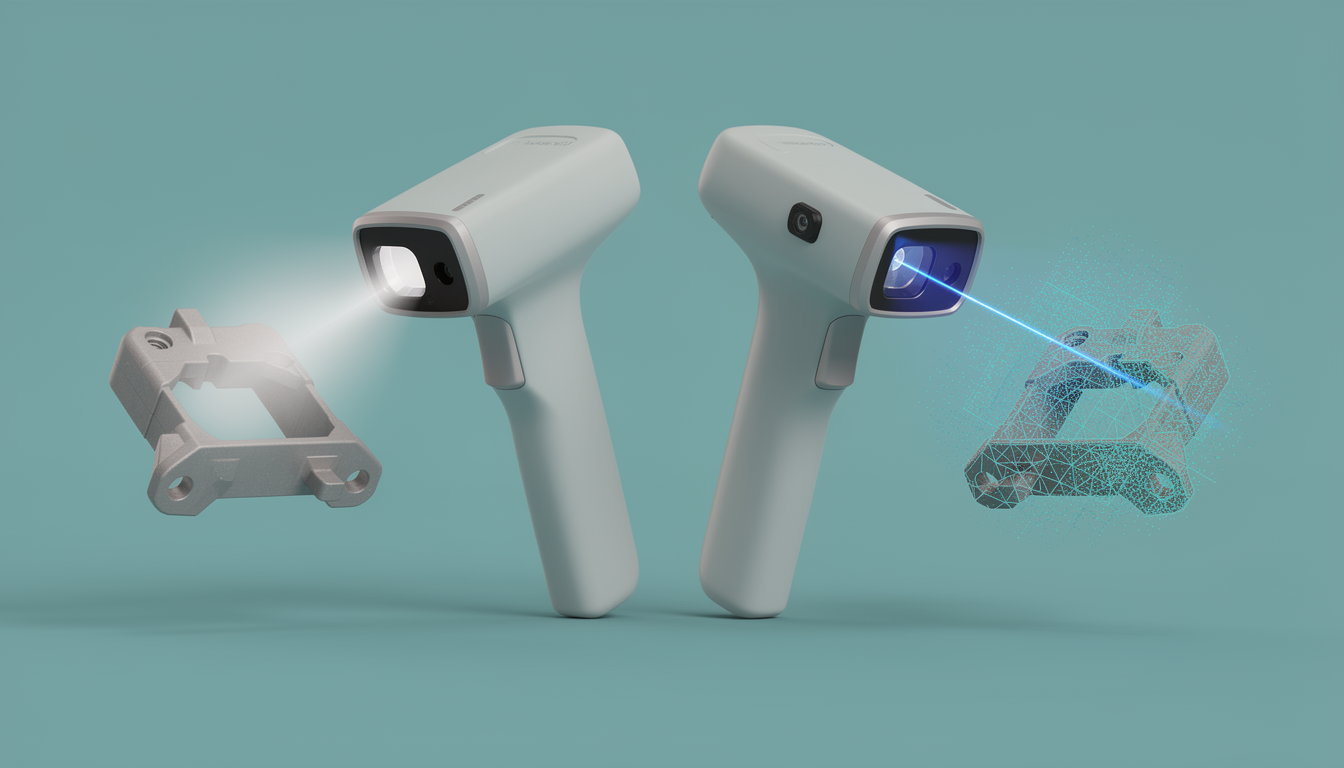
Einscan HX vs HX2: What Changed?
Both EinScan HX and HX2 are discontinued and succeeded by the EinScan Rigil, but for buyers eyeing remaining stock, HX2 added a faster frame rate and higher laser point-cloud speed.
Explore the journal
Spec-by-spec comparisons of specific 3D scanner models, built from published manufacturer specs, community test data and dated street prices.
Both EinScan HX and HX2 are discontinued and succeeded by the EinScan Rigil, but for buyers eyeing remaining stock, HX2 added a faster frame rate and higher laser point-cloud speed.
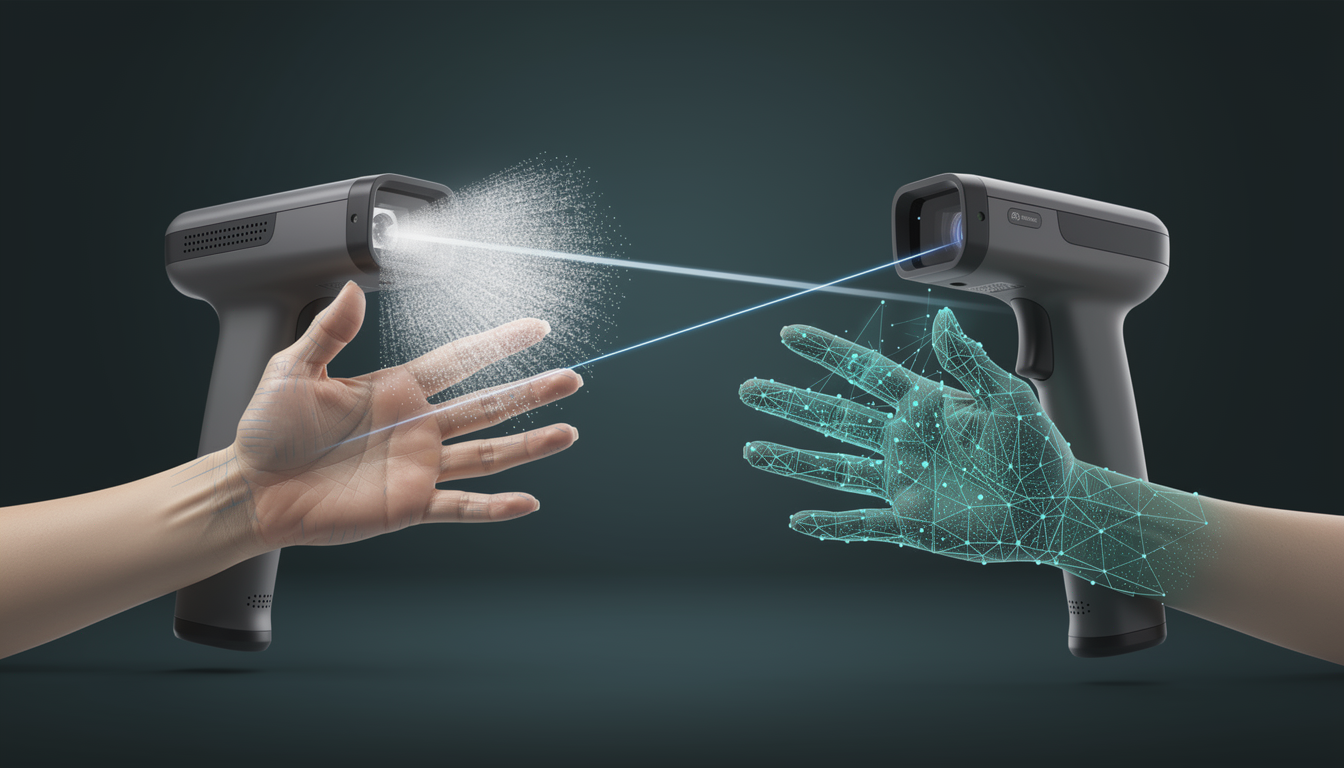
EinScan H2 is Shining3D’s current LED-and-infrared handheld, gentler for scanning people; the discontinued HX added a laser mode with tighter accuracy and a larger scan volume.
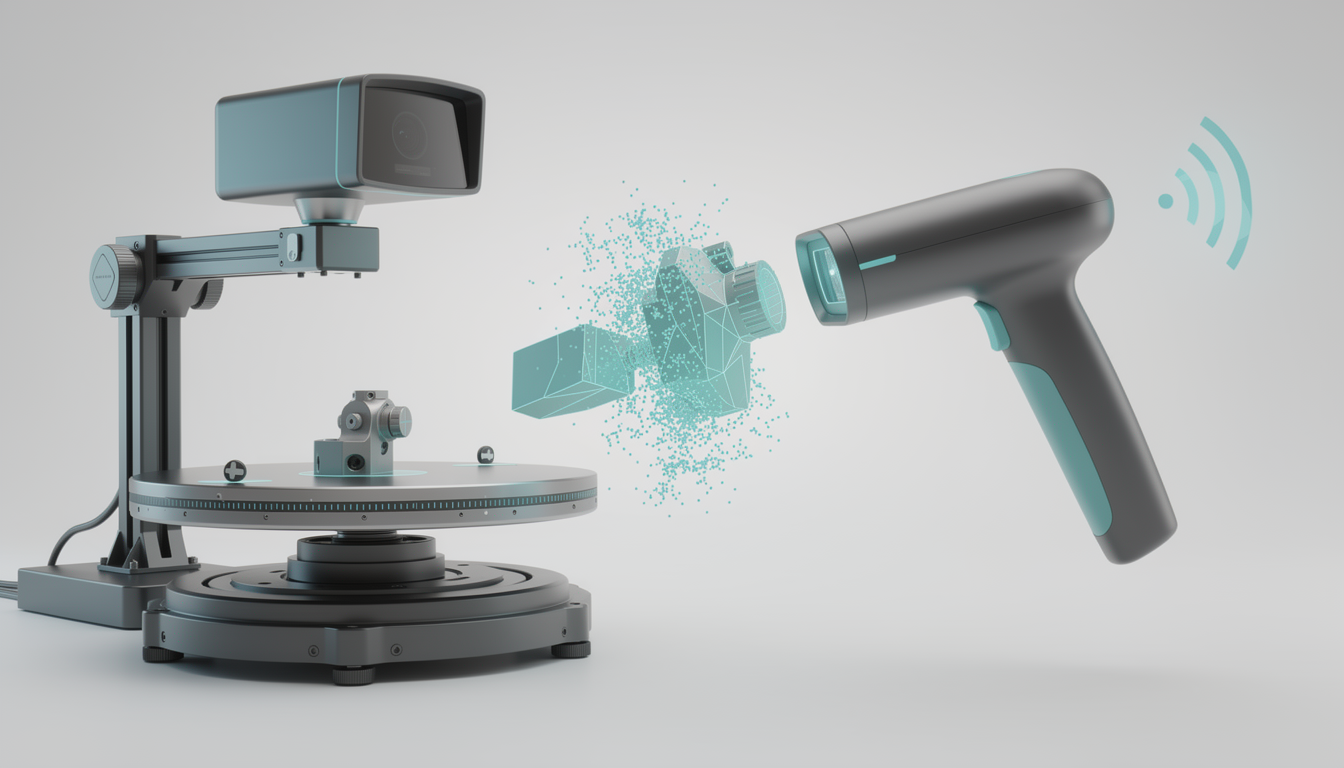
Metro X trades a full-field structured-light mode and a bundled rig for speed; Metro Y answers with a finer laser line count built for complex geometries.
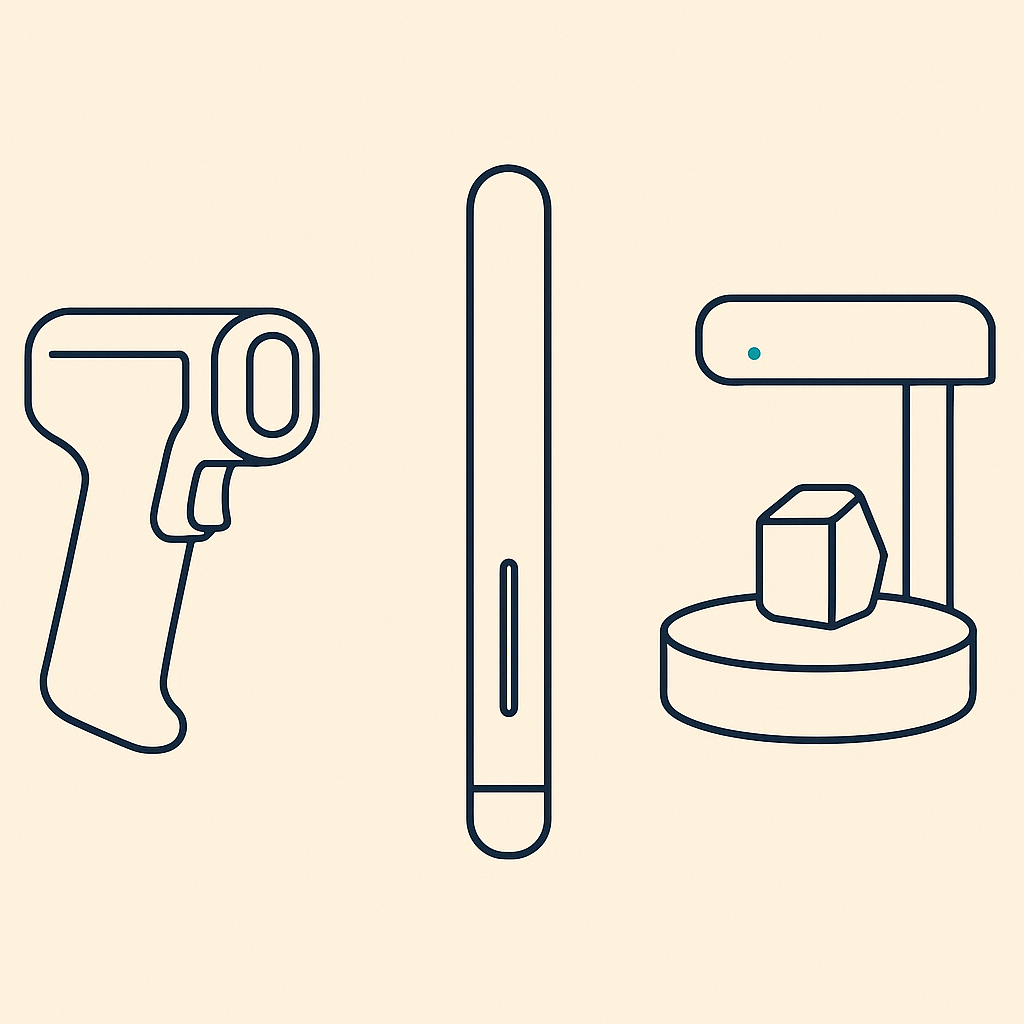
SP costs about 50% more than SE but doubles the accuracy and roughly doubles the maximum fixed-scan volume, so the gap is whether your projects need that extra tolerance.
POP 3 is Revopoint’s current handheld with full-color texture as standard; POP 2 was the original breakout scanner it replaced in the lineup.
Einstar 2 costs roughly double the original Einstar, but it also doubles point-distance resolution, multiplies frame rate sixfold, and adds a battery.
EinScan Pro 2X publishes a tighter accuracy figure at roughly a third of Artec Eva’s reseller-quoted price; Eva answers with far higher capture speed and an established industrial reputation.
Revopoint’s lineup runs wider and cheaper at the entry end; Creality counters with tighter stereo-vision accuracy on its flagship handheld, so the better brand depends on how far you want to grow.
Einstar and EinScan are both Shining3D lines split by budget: Einstar tops out under $1,700 for hobbyists, while EinScan runs from $1,199 turntables up past $6,000 for professional handhelds.
Einstar and Revopoint’s POP 3 sit at nearly the same price, but one is fully tethered while the other scans wirelessly off a phone, and that difference decides more than any spec number.
Editorial images are conceptual CGI, not product photographs or in-house tests.